Manual Electrostatic Spray Guns
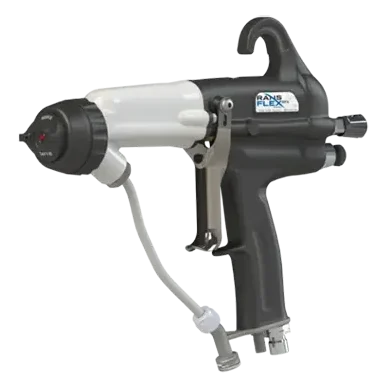
Electrostatic spray guns charge coating particles to improve wraparound coverage and reduce overspray on parts with open or uniform shapes.
Finishing operations often explore electrostatic spray technology to reduce paint usage and improve coating consistency.
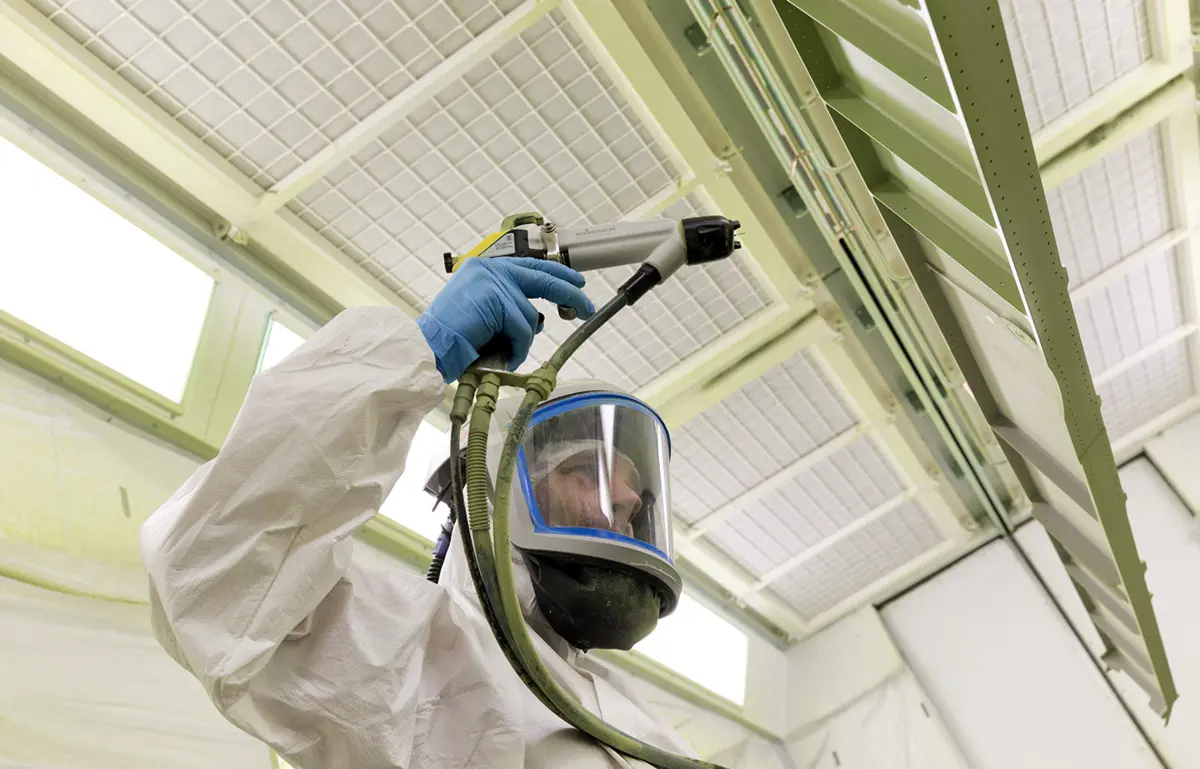
Explore Electrostatic Spray Technology
Manual electrostatic spray technology applies an electrical charge to coating particles as they are atomized. Charged particles are attracted to grounded parts, improving wraparound coverage and reducing overspray compared to non-electrostatic spray methods.
Conventional vs. Electrostatic
Compared to non-electrostatic spray technologies, manual electrostatics typically:
- Improve transfer efficiency
- Reduce material waste and overspray
- Improve coverage on exposed and accessible surfaces
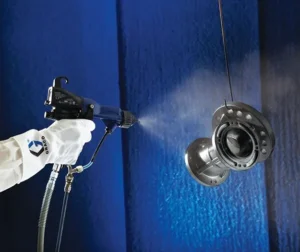
Electrostatics Wrap Around Open Parts
With proper grounding and equipment setup, electrostatic spray guns perform best on parts with relatively open or uniform geometries.
Charged coating particles can wrap around exposed surfaces, helping improve coverage while reducing overspray.
How to Improve Coverage in Corners & Recesses
Electrostatically spraying deep recesses or inside corners can cause charged coating particles to move toward the nearest grounded surface instead of the recessed area. To overcome this behavior, known as the Faraday cage effect, industrial painters can:
- Reduce or temporarily disable the electrostatic charge.
- Use non-electrostatic spraying to coat recessed areas.
- Restore electrostatic spraying to finish exposed surfaces.



Manual Electrostatic Spray Gun Selection Guide
For Improved Transfer Efficiency & Consistent Coverage
Electrostatic spray technology is commonly used on parts that support effective grounding and wraparound coverage.
Finishing operations seeking material savings and consistent coating application often choose manual electrostatic spray guns for:
- Metal components with exposed or accessible surfaces
- Frames, brackets, and assemblies with open geometries
- Wood or composite parts suitable for electrostatic application
Manual electrostatic spray guns perform well in batch, short-run, and mixed-part production environments where transfer efficiency and coating consistency are priorities.
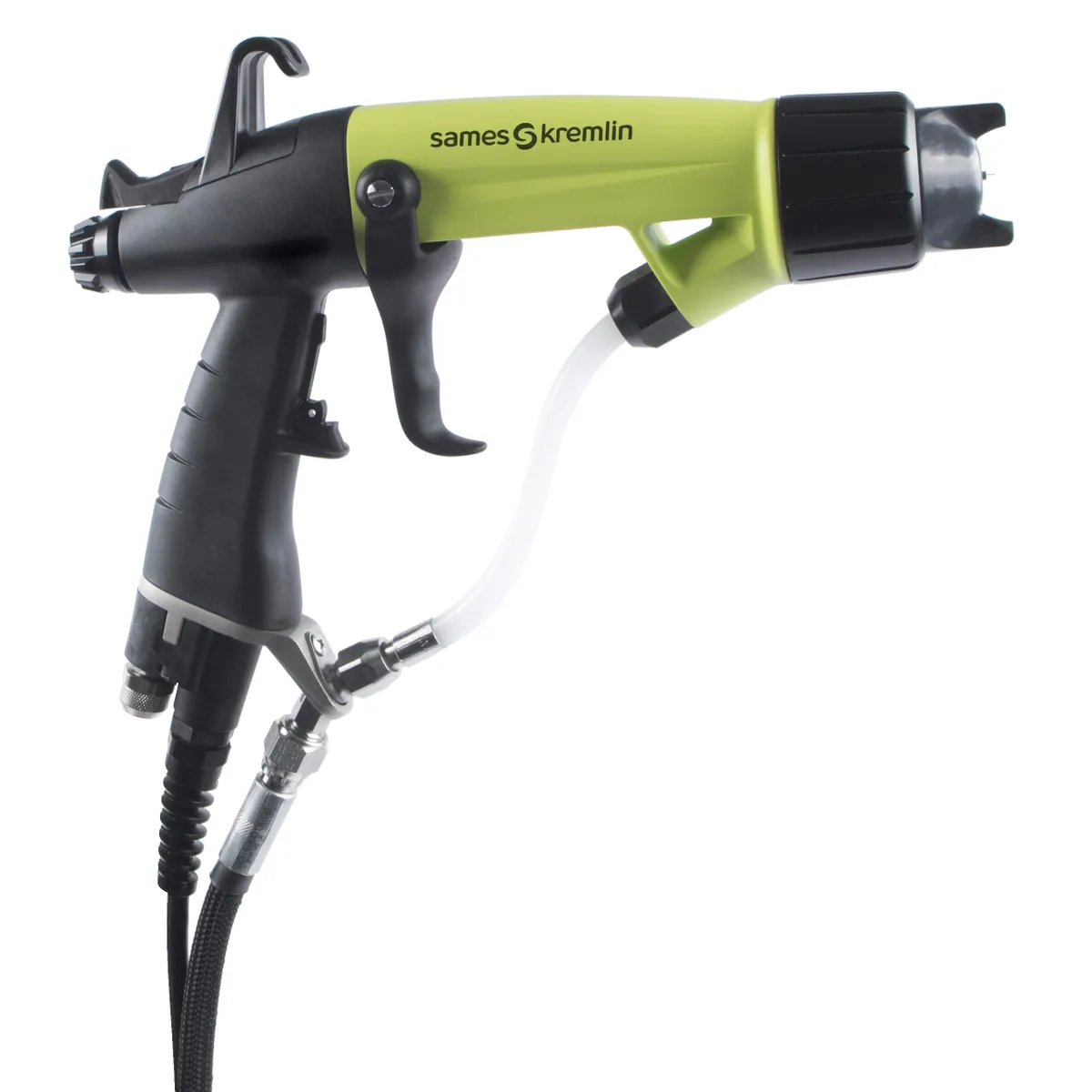
When Electrostatics Are a Good Fit
Determining whether electrostatic technology fits an industrial finishing application starts with evaluating:
- Coating material
- Part geometry
- Transfer efficiency goals
- Overspray reduction objectives
- Finish quality requirements
- Production workflow
Grounding, coating characteristics, and atomization method all influence electrostatic spray performance. ICAFe helps manufacturers evaluate these considerations to ensure the technology delivers measurable material savings and consistent finishing results.
Request a Quote
Helping You Choose the Right Manual Electrostatic Spraying Solution
ICAFe Companies helps manufacturers select, set up, and support manual electrostatic spray gun solutions within complete liquid coating systems. This ensures consistent results through proper equipment selection, fluid delivery, and process integration.
Tell us about your industrial finishing goals. Our experts will recommend solutions that produce consistent, quality results.
"*" indicates required fields