Batch Ovens
Batch ovens support controlled thermal processing for load‑by‑load production, varied part sizes, and low‑volume operations. Manufacturers rely on batch ovens when they need flexibility, process control, and part‑by‑part scheduling.
Industrial Batch Oven Technologies
Industrial batch ovens support curing, drying, and post‑coat processing for powder and liquid applications. Designs range from compact enclosures to tunnel‑style batch systems that improve loading efficiency while maintaining process control.
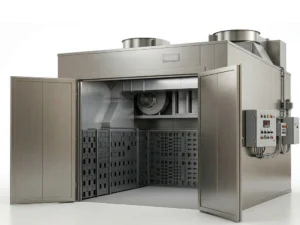
Convection Batch Ovens
Convection batch ovens circulate heated air to maintain uniform temperature for curing, drying, and heat processing. Manufacturers choose them for powder coating and liquid paint applications that require consistent heat distribution and predictable cure results.
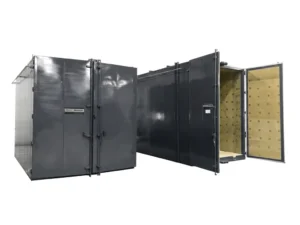
Burnoff Ovens
Burnoff ovens apply high heat to remove coatings, contaminants, or buildup from parts, racks, and fixtures through controlled thermal decomposition. Maintenance teams use these systems to strip coatings before recoating or reuse.
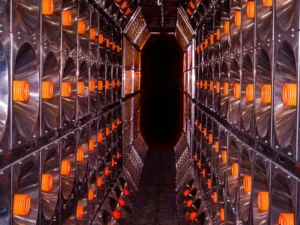
Infrared (IR) Batch Ovens
Infrared batch ovens transfer radiant heat directly to the part or coating, reducing ramp‑up time and cycle time. Manufacturers apply IR technology when production targets require higher throughput, lower energy use, or reduced oven footprint.
Batch Oven Selection Guide
Convection, Infrared & Burnoff Technologies Support Different Requirements
Manufacturers select convection, infrared, or burnoff technologies based on how heat must be delivered, the production environment, and the requirements of the overall finishing process.
To align system capacity with production demand, ICAFe evaluates these requirements:
- Part size and load configuration determine chamber dimensions, racking design, and airflow distribution requirements.
- Production rate and cycle time define heating capacity, recovery time, and number of loads processed per shift.
- Coating type and cure profile affect temperature range, ramp rate, and dwell time requirements.
- Thermal mass of parts and fixtures impacts energy input, heat‑up time, and system responsiveness.
- Loading method influences door design, layout, and integration with handling equipment.
- Available floor space and plant layout determine system footprint, orientation, and configuration options.
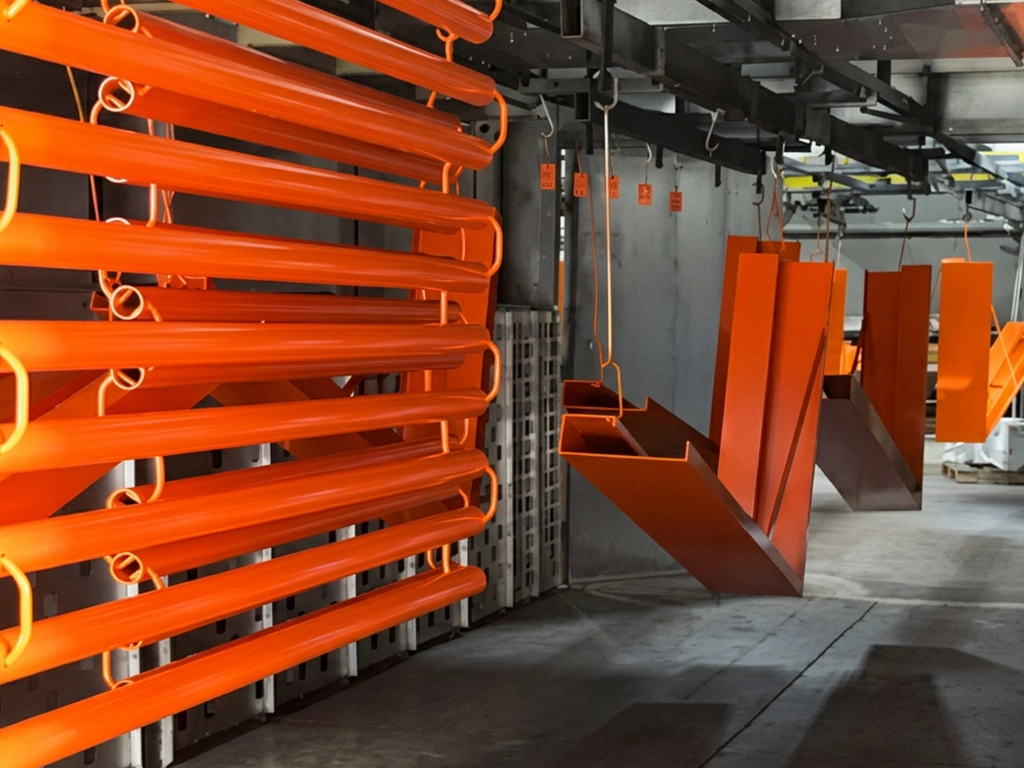
Batch Oven Applications
Part characteristics, coating requirements, and production flow define batch oven selection. ICAFe works with manufacturers to align oven type and configuration with how parts move through curing and drying processes.
- Metal Part Powder Coating: Manufacturers in fabricated metal, heavy equipment, and automotive component production use batch ovens to cure powder‑coated parts that vary in size and move through the process one load at a time.
- Liquid Paint Drying and Curing: Manufacturers in general manufacturing, agricultural equipment, and industrial component finishing use batch ovens to dry or cure painted parts before handling or assembly.
- Low‑Volume or High‑Mix Manufacturing: Job shops, contract manufacturers, and custom fabrication facilities use batch ovens when part types, coatings, and production volumes change frequently.
- Oversized or Complex Part Processing: Manufacturers in heavy equipment, energy, structural fabrication, and transportation use batch ovens to process large or irregular parts that cannot move through conveyors.
Request a Quote
Tell us about your batch oven application, including part size, coating type, and production requirements. Our experts will evaluate your process and recommend a system configuration that aligns with production goals, facility constraints, and long‑term support needs.
"*" indicates required fields
Equipment Partners for Batch Ovens

globalfinishing.com

primeheatsystems.com
rohnerspraybooths.com