Automatic Electrostatic Spray Guns
Electrostatic spray guns improve transfer efficiency by charging coating particles and attracting them to grounded parts. On automated paint lines, electrostatics reduce overspray and stabilize coating results.
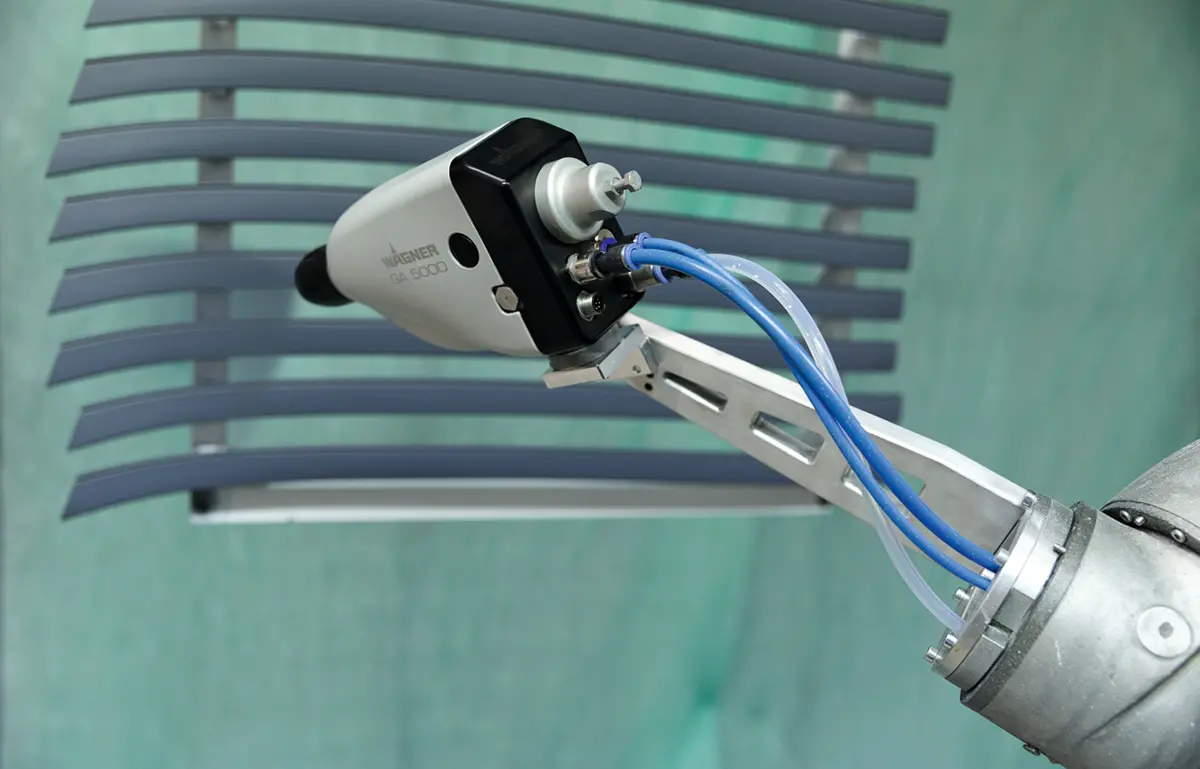
Explore Auto Electrostatic Industrial Finishing
Automatic electrostatic spray technology applies an electrical charge to coating particles during atomization. This process increases transfer efficiency and improves wraparound coverage compared to non-electrostatic spray methods.
Manufacturers use automatic electrostatic spray guns to control paint usage, enhance wraparound coverage, and maintain consistent results across high-volume production.
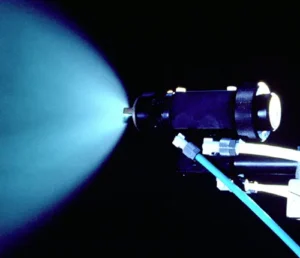
Conventional vs. Electrostatic
Compared to non‑electrostatic sprayers, automatic electrostatic spray guns typically:
- Improve transfer efficiency
- Reduce material waste and overspray
- Improve coverage and consistent coating application
Electrostatics Work Best on Open Parts
 With proper grounding and paint line setup, electrostatic spray guns perform best on parts with relatively open or uniform geometries. Charged coating particles can wrap around exposed surfaces, helping improve coverage while reducing overspray.
How Automated Systems Handle Corners & Recesses
Electrostatically spraying deep recesses or inside corners can cause charged coating particles to move toward the nearest grounded surface instead of the recessed area. To improve coverage in these areas, finishing operations may:
- Reduce or temporarily disable the electrostatic charge
- Use non-electrostatic spraying for recessed areas
- Restore electrostatic spraying to finish exposed surfaces



Automatic Electrostatic Sprayer Selection Guide
For High Transfer Efficiency on Automated Paint Lines
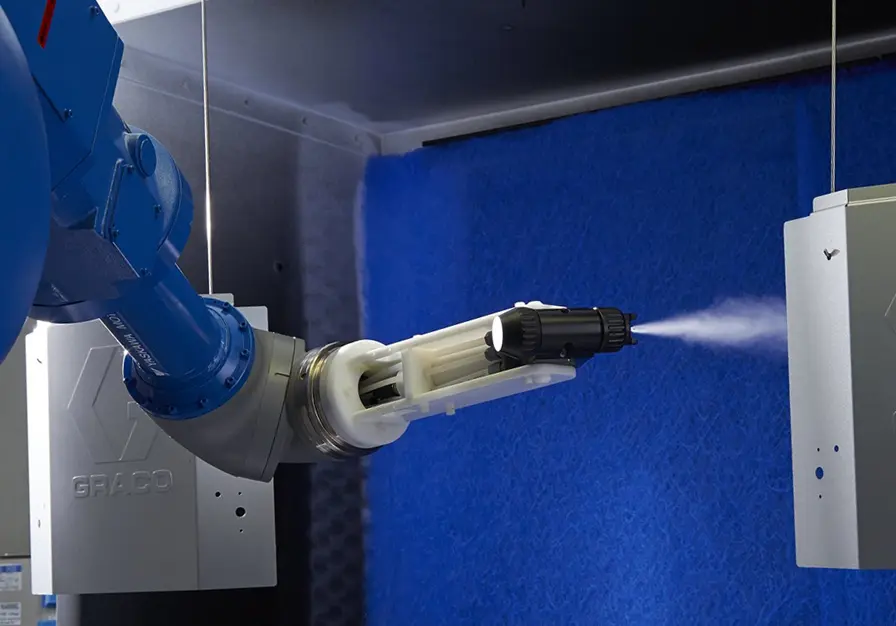
Automatic electrostatic applications rely on consistent grounding, stable spray distances, and controlled part presentation to achieve high transfer efficiency and predictable coating results.
Such goals remain essential to automated paint lines across industries such as:
- Automotive components and sub-assemblies
- Appliances, enclosures, and consumer durable goods
- Metal furniture, shelving, and storage systems
- Industrial equipment and fabricated metal parts with exposed surfaces
Automatic electrostatic spray guns perform well in high-volume finishing operations where transfer efficiency, coating consistency, and material savings are priorities.
When Electrostatics Are a Good Fit
Determining whether electrostatic technology fits an automated finishing process starts with evaluating:
- Transfer efficiency and overspray reduction goals
- Finish quality requirements
- Coating material (solvent‑ or water‑based)
- Atomization method (air spray or air‑assisted airless)
- Part geometry and grounding
- Production workflow
ICAFe helps manufacturers evaluate these considerations to ensure their electrostatic spray technology delivers measurable material savings and consistent finishing results.
Request a Quote
Helping You Choose the Right Automatic Electrostatic Spray Gun Solution
More than an industrial finishing equipment supplier, ICAFe Companies helps manufacturers:
- Evaluate coating materials, finish requirements, and production goals
- Match spray gun technology to efficiency, coverage, and automation needs
- Integrate spray guns with fluid delivery, controls, booths, and motion systems
- Support installation, training, optimization, and long‑term service
This approach helps ensure automatic electrostatic spray technology improves transfer efficiency and quality across automated paint lines.
"*" indicates required fields