Automatic Air Spray Guns
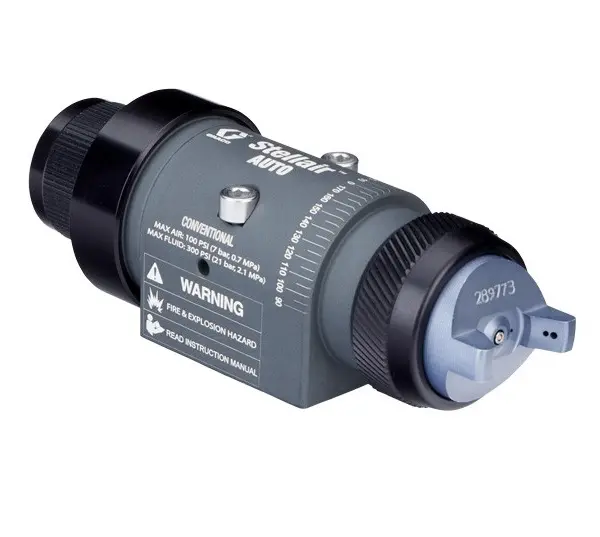
Manufacturers use automatic air spray guns in conveyorized, in-line, and robotic paint lines when visual quality, repeatability, and process control are priorities.
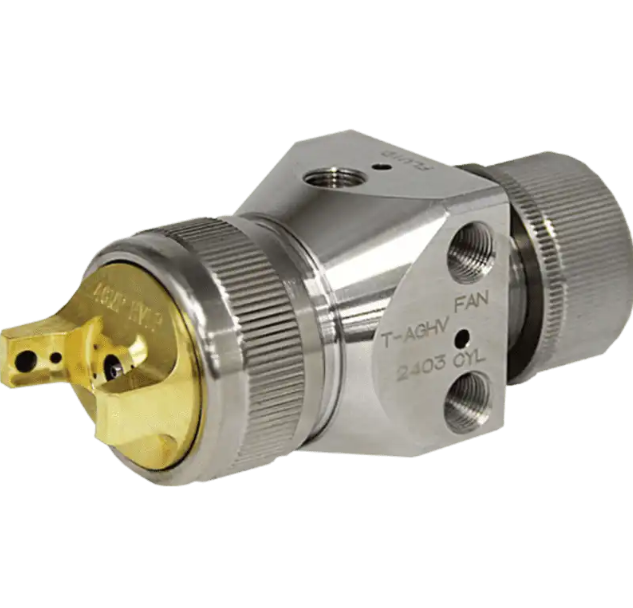
HVLP, Conventional & Compliant Auto Air Spray
Automatic air spray technology is commonly selected when finish appearance and process consistency are more important than maximum material output. HVLP, compliant, and conventional variations support different finish quality and environmental requirements.
| Air Spray Technology | How It Works | Best For |
|---|---|---|
| HVLP (high volume low pressure) | Limits air pressure to about 10 pounds per square inch (psi) at the air cap, producing a low velocity spray pattern. | High‑quality finishes, improved material efficiency, and compliance with U.S. Environmental Protection Agency (EPA) standards |
| Conventional | Uses air pressures of 20 psi or above to achieve fine finishes at high production speeds. | Class A and decorative finishes where surface appearance outweighs overspray concerns |
| Compliant or LVMP (low volume medium pressure) | Controls air inlet pressure to 29 psi or less. LVMP air caps aim to limit pressure while achieving transfer efficiency equal or better than HVLP. | Meeting international environmental standards, while balancing appearance and productivity |
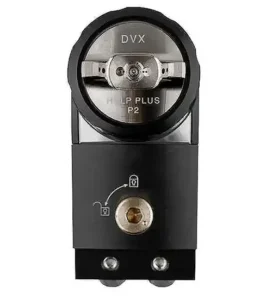
Changing Air Spray Technologies
Automated paint lines and robotic spray booths can switch between HVLP, conventional, and compliant air spray technologies. Operators typically change and adjust the air caps on their automatic air spray guns.



Automatic Air Spray Selection Guide
For High-Quality, Repeatable Industrial Finishing Results
Manufacturers use automatic air spray guns when consistent visual quality and process repeatability matter more than maximum material output.
These applications run in controlled paint line environments that benefit from fixed spray distances, stable atomization, and repeatable gun positioning:
- Automotive components and sub-assemblies
- Furniture, cabinetry, and decorative wood products
- Appliances and consumer goods
- Finished metal parts with appearance-critical surfaces
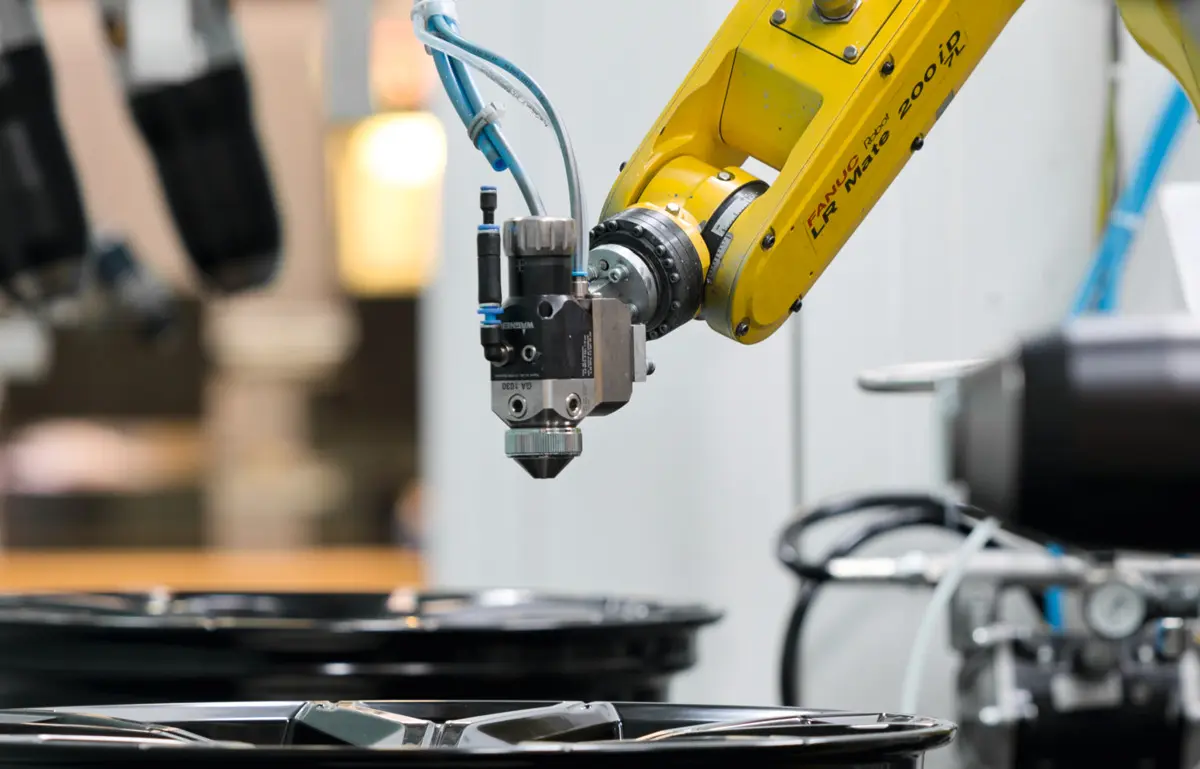
When Air Spray Is a Good Fit
Determining whether air spray technology fits an automated finishing process starts with evaluating:
- Finish quality requirements
- Transfer efficiency goals
- Coating material (solvent‑ or water‑based)
- Environmental requirements
- Production volume
- Integration with reciprocators, robots, and line controls
ICAFe helps manufacturers evaluate these considerations to ensure automatic air spray technology supports consistent finish quality and repeatable production results.
Request a Quote
Helping You Choose the Right Automatic Air Spray Gun Solution
More than an industrial finishing equipment supplier, ICAFe Companies helps manufacturers:
- Evaluate coating materials, finish requirements, and production goals
- Match spray gun technology to appearance, throughput, and automation needs
- Integrate spray guns with fluid delivery, controls, booths, and motion systems
- Support installation, training, optimization, and long‑term service
This approach reduces risk and ensures automatic air spray technology delivers consistent, high‑quality finishing results.
"*" indicates required fields